
Are you an SDET or SRE? What about the SLE – or Software Lifecycle Engineer? What is that? Find out on this episode of the SMC Journal.
Video Insights about SDET or SRE
Discussing segmentation and specialization in the market. This includes titles and what people do, as well as how tool vendors specialize to meet the needs of these roles.
The need to specialize is a need for PRECISION.
https://www.linkedin.com/pulse/do-you-need-sdet-seal-scott-moore/
I’m considering updating this from the SEAL (Software Engineer Across the Lifecycle) to SLE (Software Lifecycle Engineer). It means essentially the same thing.
Dirty little secret: Not everyone has to do what Google does, or do Agile methodology, or DevOps, or Kubernetes, etc to succeed in business or remain competitive.
Specialization vs. Generalization in Software Development
In his “Performance Rant! SDET, SRE, or SLE?” video, Scott Moore argues that specialization is key to achieving precision in software development. He contends that while the industry is trending towards generalist roles like SDETs (Software Development Engineers in Test) and SREs (Site Reliability Engineers), these roles often fail to encompass the full software lifecycle, particularly when it comes to performance. Moore believes that developers, even those with testing experience, cannot match the expertise of those who specialize in areas like performance, functional, or security testing.
Moore acknowledges that SDETs and SREs originated from Microsoft and Google respectively, with well-defined roles and responsibilities. He explains that SDETs are embedded within development teams and focus on testing, while SREs straddle development and operations, spending 50% of their time in each. He further emphasizes that SREs were intended to be a “find it and fix it” team, empowered to swiftly address production issues without cumbersome bureaucratic processes.
However, Moore observes that in practice, these roles often deviate from their original intent. SREs, in particular, often get bogged down in third-tier support or firefighting, rather than focusing on proactive problem prevention and automation. Similarly, SDETs may lack the depth of experience needed to effectively test complex systems across the entire lifecycle.
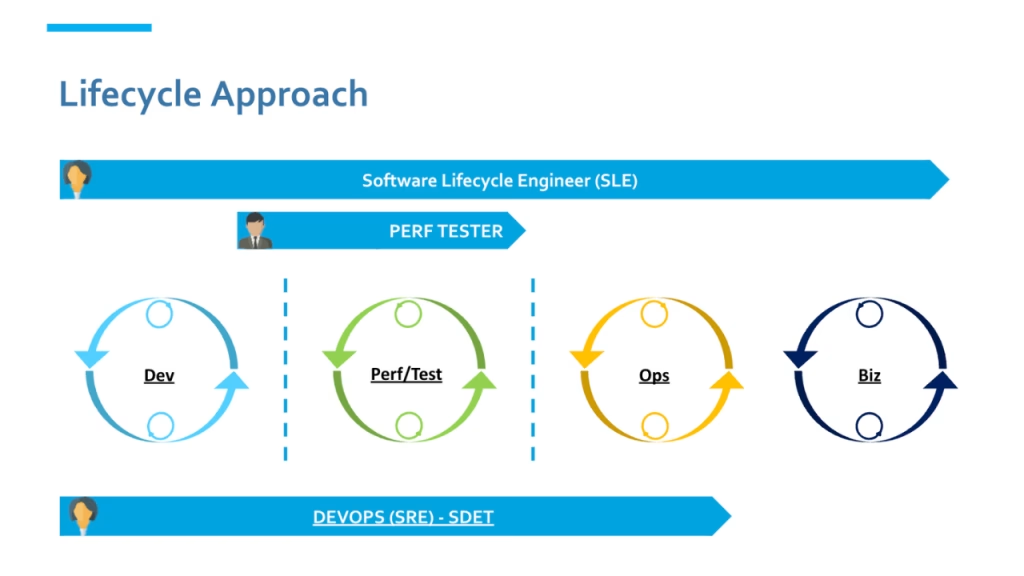
Introducing the Software Lifecycle Engineer (SLE)
To address these shortcomings, Moore proposes the concept of the Software Lifecycle Engineer (SLE). This role, unlike the SDET or SRE, encompasses the entire software lifecycle, from development to testing to operations, always keeping the business perspective in mind. While SLEs may have a broad scope, they maintain a narrow focus, specializing in a specific area like performance, security, or functionality.
Moore uses the analogy of seeking medical attention to illustrate his point. While a general practitioner is sufficient for common ailments, a specialist is essential for complex or rare conditions requiring deep expertise and experience. Similarly, he argues that while generalist roles like SDETs and SREs may be sufficient for companies where precision isn’t paramount, companies striving for market leadership and requiring high performance need specialized SLEs.
The Need for Continued Discussion about SDET or SRE
Moore concludes by inviting his audience to share their perspectives and experiences, acknowledging that his views are based on his own observations and may not reflect everyone’s reality. He encourages open discussion and debate on the roles of SDETs, SREs, and SLEs in modern software development, emphasizing the need for tailored solutions based on specific organizational needs and goals.
Check out this other episode about the battle of SRE verses Performance Engineers.
🔥 Like and Subscribe 🔥
Connect with me 👋
TWITTER ► https://bit.ly/3HmWF8d
LINKEDIN COMPANY ► https://bit.ly/3kICS9g
LINKEDIN PROFILE ► https://bit.ly/30Eshp7
Want to support the show? Buy Me A Coffee! https://bit.ly/3NadcPK
🔗 Links:
- Scott Moore Consulting: https://scottmoore.consulting
- The Performance Tour: https://theperformancetour.com
- SMC Journal: https://smcjournal.com
- DevOps Driving: https://devopsdriving.com
- Security Champions https://thesecuritychampions.com